MANAGING PYRETHROID RESISTANCE IN BOLLWORM CLUSTERS
The apparent paradox of resistance management and yield pivots on the "turtles all the way down" puzzle—showing how biology and advanced chemistry can overcome infinite regress.

When you consider the origin of life, the origin of the universe, or any other origin story, one question inevitably rears its ugly head: what caused the beginning? This apparent paradox has vexed humanity for millennia. It’s responsible for philosophical terms like “the prime or unmoved mover” or “the uncaused cause.” In the realm of agrochemicals, a similar paradox exists: how do we break the cycle of pest resistance without creating an endless loop of stronger, more toxic interventions?
‘IT’S A CHICKEN-AND-EGG PROBLEM’ OR THE WHIMSICAL ‘IT’S TURTLES ALL THE WAY DOWN’
In spite of it all, agricultural science has achieved considerable insight on this question of infinite regress. This month, we examine the conundrum with the help of advanced stereochemistry and receptor targeting. Some require serious investigation, and others are more whimsical and subjective, but hopefully all will be illuminating.
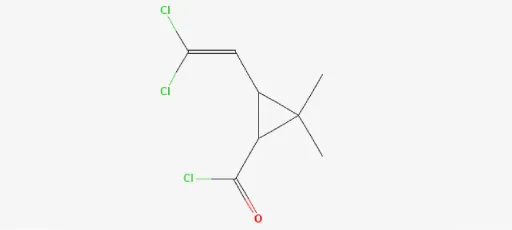
Fig 1. The structure of Cypermethric Acid Chloride, central to understanding resistance mechanisms.
In biology, the problem of infinite regress has been solved by Darwin’s theory of evolution, a feat so momentous that the philosopher Daniel Dennett has called it “the single best idea anyone ever had.” When applied to pest resistance, this evolutionary lens becomes our greatest tool.
DARWIN’S THEORY OF EVOLUTION EXPLAINED THE ORIGINS OF BIOLOGY AS ‘DESCENT WITH MODIFICATION’
That takes place by means of the ingenious principle of natural selection — Darwin adduced mountains of evidence for both the process and the mechanism. From a philosophical perspective, Darwin’s solution has a couple of features that neatly melt the conceptual difficulties we have with infinite regress in chemical efficacy.
The first is the notion that the categories we think of as fixed, such as species or resistance traits, are in fact fluid, slowly and imperceptibly evolving from one into another over the ages. The second is the idea that as we go backward in time, life-forms get simpler and simpler, with a gradual bridging of the gaps we see between modern species. The forms at the very beginning are so simple that it becomes easier to see them arising from nothing more than elementary physics and chemistry.
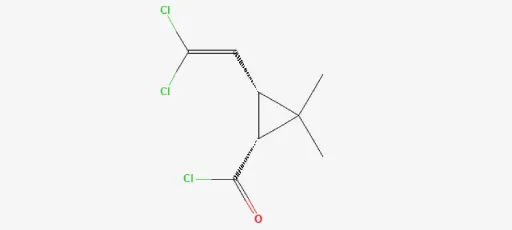
Fig 2. High CIS CMAC stereoisomers show varying degrees of insecticidal activity.
This fundamental paradigm shift allows us to approach resistance not as a static wall, but as an evolving landscape that requires rotational chemistry and deep understanding of molecular interactions at the receptor level. Only by respecting the evolutionary pressure we exert on pests can we design truly sustainable crop protection and nutrition strategies.